Neuroscience 2026 – NX210c’s neurovascular and peripheral effect in ALS
NX210c, an innovative peptide with neurovascular and peripheral effect in ALS
A. JANUS, S. MARIE, J. LE DOUCE, N. REBERGUE, Y. GODFRIN; Axoltis Pharma, Lyon, France
Background
NX210c is a 12 amino acid peptide designed from subcommissural organ spondin, a glycoprotein essential for nervous system development. β1‑integrin has been identified as its most important receptor. Increasing evidence suggests that disruption of blood-brain and blood-spinal cord barrier integrity may contribute to ALS pathophysiology, alongside other pathogenic mechanisms, leading to neuroaxonal loss. In this context, NX210c links activity across the neurovascular unit, extracellular matrix-cell interactions, and neural cells, thereby providing a unified basis for barrier stabilization and synaptic modulation.
Method
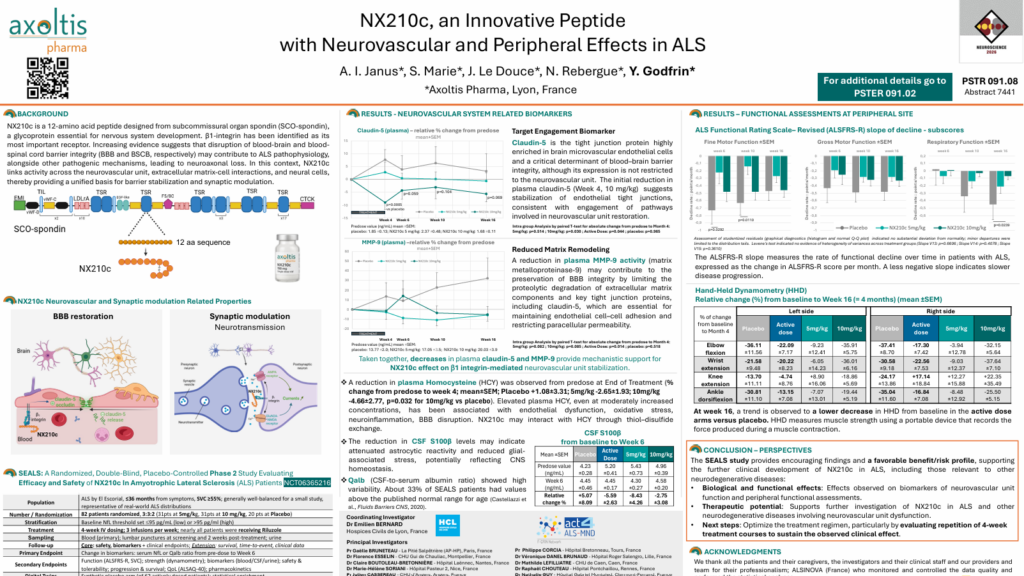
The SEALS Phase 2 clinical trial (NCT 06365216) investigated biomarkers and clinical outcomes in 82 ALS patients randomized to doses of 5 mg/kg, 10 mg/kg or placebo in a 3:3:2 ratio, stratified by neurofilament light (NfL, in serum), a prognostic biomarker of disease activity. The co-primary endpoints were change in NfL or Q albumin ratio 2 weeks following a 3-times per week for 4 weeks treatment with intravenous infusion of NX210c (or placebo). Secondary endpoints included fluid biomarkers, clinical and functional outcomes, including bilateral strength using handheld dynamometry (HHD) in the upper and lower limbs (elbow flexion, wrist extension, knee extension, ankle dorsiflexion)
Results
At week-6, a decrease of more than 10 NfL from baseline was observed in a subgroup of patients and was associated with Qalb decrease in 43% and 87.5% of patients at 5 mg/kg and 10 mg/kg, respectively. At the end of treatment, about 30% of the patients treated at 5mg/kg have a HHD improvement (left and right) in the 4 muscle categories.
Conclusion
Extending the β1 integrin based framework across the blood-neural barrier axis, early changes in HHD observed at end of treatment (4 weeks) in a subset of NX210c‑treated ALS patients could be consistent with peripheral repair biology and support a potential effect at residual motor units. These findings localize early clinical effects of NX210c as a novel therapeutic to the peripheral motor unit—where reinnervation remains actionable—with possible adjunctive contributions through neurovascular stabilization and reduced excitotoxic stress over time.